Convert Scanned PDF to Word Easily
If you work with documents at all, you’ve probably run into a captured PDF that you need to edit. Maybe it’s a contract, an old report someone dug up. Either way, being able to convert scanned PDF to the Word is a lifesaver.
This guide’s for you if you’ve ever stared down an image-based PDF and wondered, "How am I supposed to change this?" I’ll break down the easiest ways to pull text out of those pics and drop it right into DOC, so you can actually work with your papers instead of fighting them.
Here’s the thing about digitized PDFs: they’re basically pictures, so you can’t search, edit, or copy words - at least not without some help. Plus, they tend to be huge. That’s why you need tools that can handle OCR (that’s Optical Character Recognition).

How we picked scanned PDF to Word converters
Finding the right PDF text recognition tool matters if you want your PDFs to turn into usable documents. Here’s what we looked at when we put together our recommendations:
- OCR accuracy. We tried out each app ourselves to see how well it picked up the words from PDFs.
- Supported formats. We checked how many different types each utility could handle.
- Output formatting. We paid extra attention to which instrument kept the original look and feel of the PDF once you processed it.
By carefully evaluating these criteria, we aimed to provide a curated list of PDF to text converters that cater to diverse needs, ensuring a smooth and reliable experience.
Option 1. PDF Candy Desktop
PDF Candy makes turning scanned documents into Word docs quick and painless. You just run your file through it, and the output looks sharp - sentences, images, tables, formatting, all come through clean.
How to recognize text in PDF with PDF Candy Desktop
- Download and install the PDF software on your computer.
- Open the application and select the "OCR" option.
- Drop in your rasterized PDF.
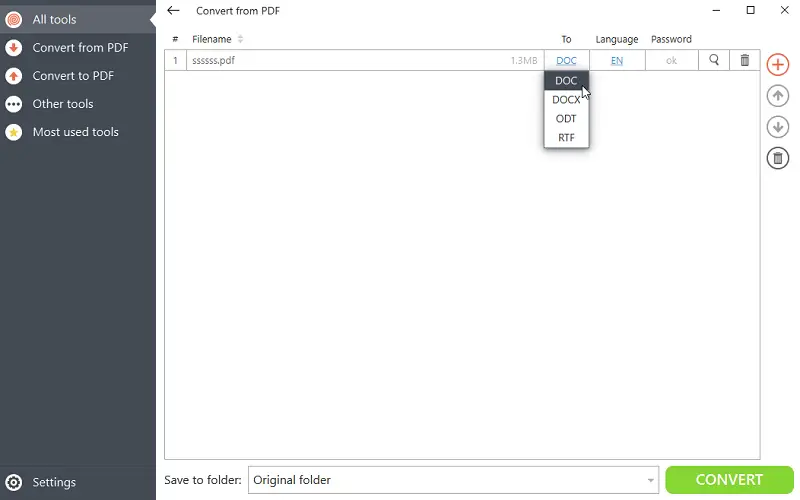
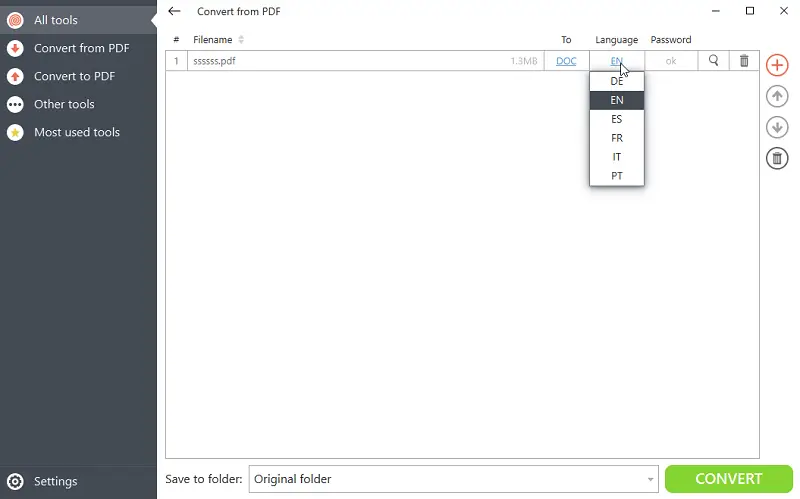
- Choose the right language for your paper, pick DOC or DOCX as the format, then hit "Convert". The program takes care of the rest.
- When it’s done, you’ll find your new file in the folder you picked.
Pros:
- Loads of output options. You can convert to DOC, DOCX, ODT, or RTF - whatever you need.
- Keeps the quality. Your files look great, almost identical to the originals.
- Easy to use. The layout is simple, so even if you’re not a tech expert, you’ll feel right at home.
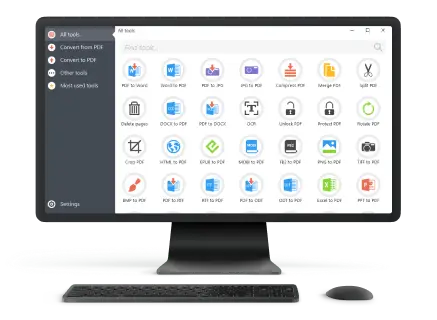
- All-in-one toolkit. Besides transforming, you can split or merge PDFs, add or remove passwords, rotate pages, pull out images, and more.
- Handles batches fast. You can turn a bunch of scanned docs at once. No need to do them one by one.
Cons:
- Only works on Windows. If you’re on a Mac, you’re out of luck.
Option 2. Abbyy FineReader
Abbyy FineReader is an OCR tool that turns scanned PDFs, footage, and all kinds of papers into something you can modify. It gives you three accuracy options: full, field-level, and zonal. If you’re working with tables or forms, it can pick up phrases from those too.
How to convert PDF to text with the help of Abbyy FineReader
- Install the program on your device.
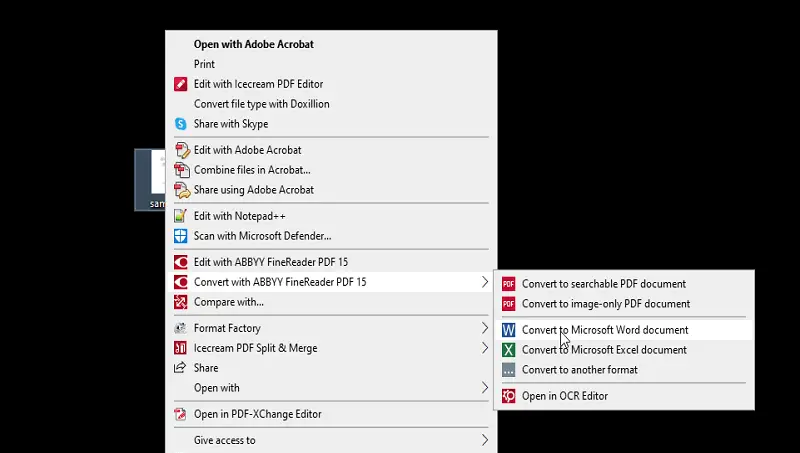
- Choose the scanned PDF that requires conversion, right-click on it, and select "Convert with Abbyy Finereader PDF".
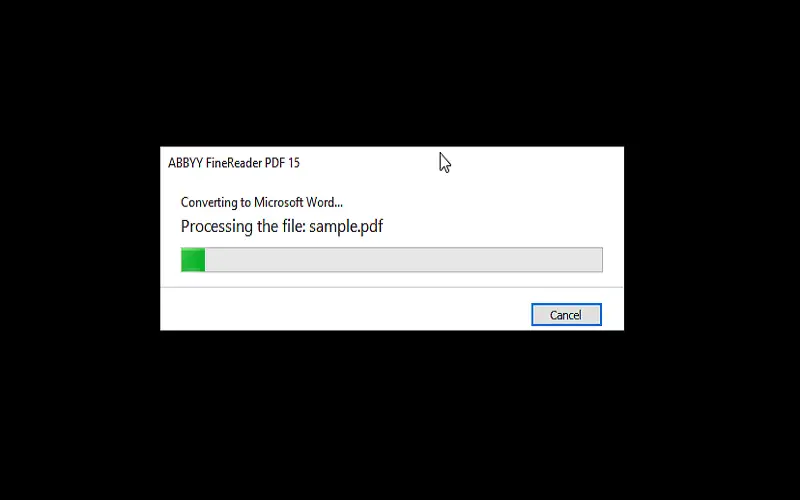
- In the drop-down menu pick "Convert to Microsoft Word Document".
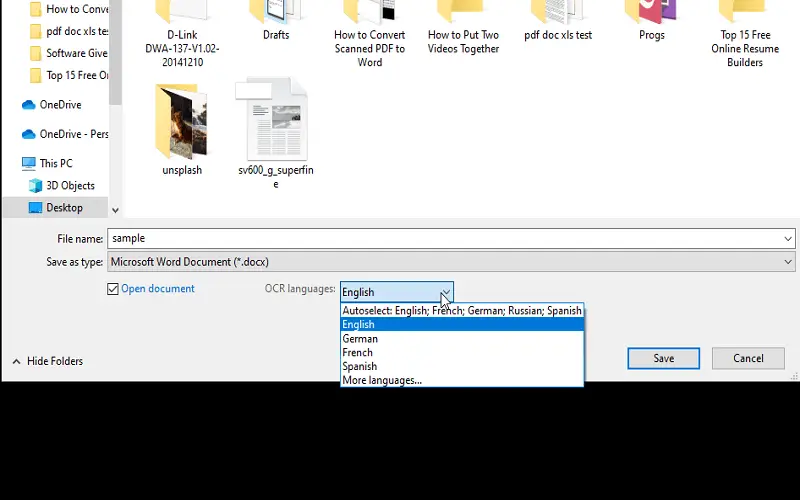
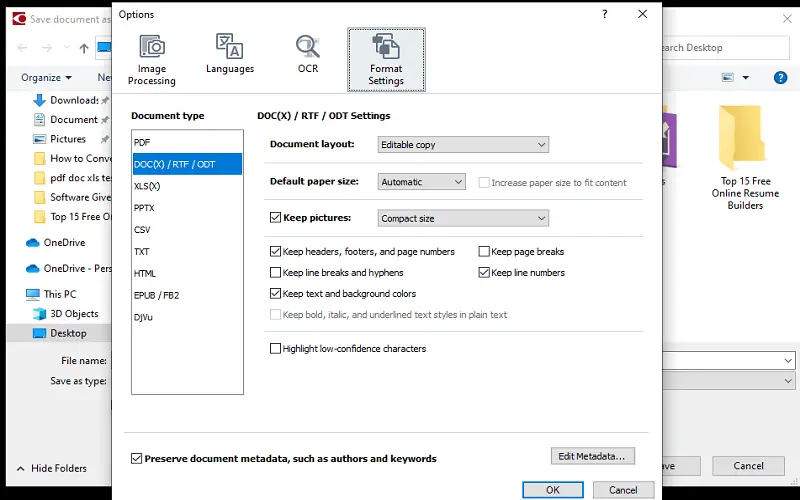
- Specify the OCR languages and adjust the settings for the PDF recognition.
- Once completed, hit "Save".
Pros:
- Recognizes tons of languages like English, Spanish, German, and French.
- Lets you export to all sorts of formats - Word, Excel, HTML, XML, and more.
- Keeps your document’s layout looking just like the original.
Cons:
- Can eat up a lot of system resources, especially with big files or lots of items at once.
- The PDF OCR installer is pretty hefty, so it takes up a chunk of space.
Early OCR struggled with font variations, but advances in computing and machine learning have significantly improved accuracy.
Option 3. Adobe Acrobat
Adobe Acrobat packs a serious punch when it comes to creating, managing, and editing PDFs. On top of that, it lets you change non-searchable PDFs into Word you can tweak. The process is pretty straightforward.
How to convert scanned document to Word in Adobe Acrobat
- Open your material in the program.
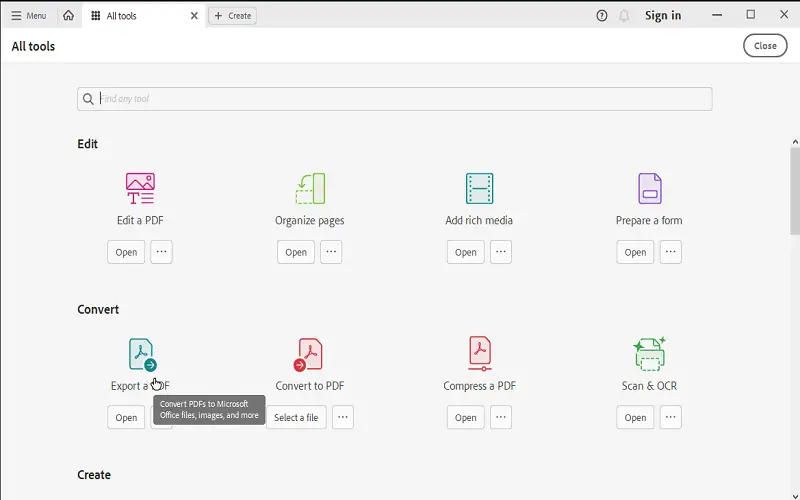
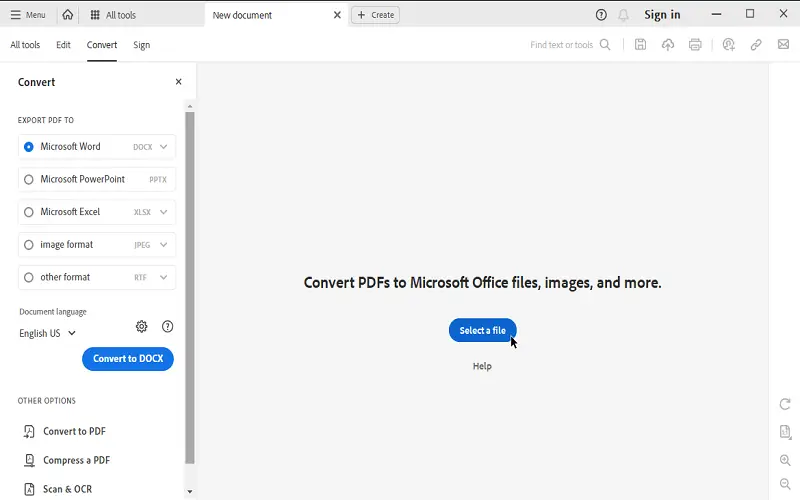
- Click the "Tools" tab. Choose "Export PDF" from the menu.
- Select "Microsoft Word" from the available options.
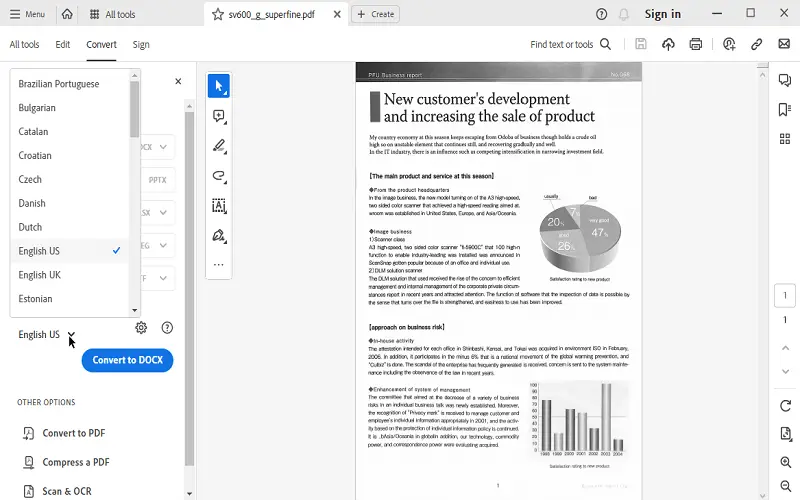
- Pick the language of the original. Press "Convert to DOC".
- Enter a name for your new file and choose a location for it on your computer, then click "Save".
- Your PDF has now been converted into Word for editing or further formatting.
Pros:
- Compatible with Mac and Windows.
- Able to recognize a mixture of fonts.
Cons:
- Converting PDF to Word is not cheap, you have to pay quite a lot.
- PDF text recognition sometimes misses the mark.
- Formatting like tables and images might not come through perfectly.
- Struggles with big documents with complicated layouts.
Option 4. SmallPDF
SmallPDF is a popular online platform that makes it simple to convert PDF files. One standout feature: it can pull text from scans and modify them .
How to convert digitized PDF to Word on SmallPDF website
- Open the utility.
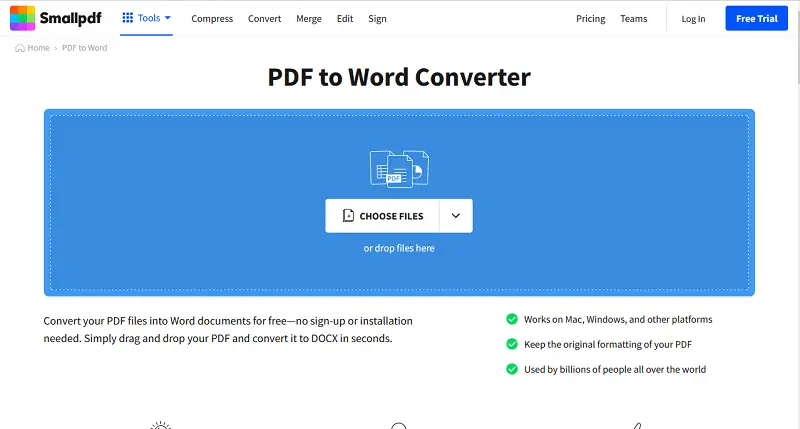
- Click the "Choose Files" button and pick the PDF.
- Select "Convert text from scans".
- Await the completion of the process.
- Download your new Word file once it’s ready.
Pros:
- Super easy steps - perfect if you’re new to this kind of thing.
- Can rapidly transform scanned documents into Word.
- Your files stay safe: everything gets encrypted and stored securely in the cloud.
Cons:
- You’ll need the PRO version to utilize the OCR tool.
- Sometimes the converted Word doesn’t look as sharp as the original.
Option 5. PDF2Go
PDF2Go is an online tool that helps users quickly convert PDF into different formats. It includes a feature that allows you to turn documents into searchable text, making it easier to work with drafts that were originally images.
How you can convert a scan in PDF to Word with PDF2Go
- Head over to the PDF2Go.
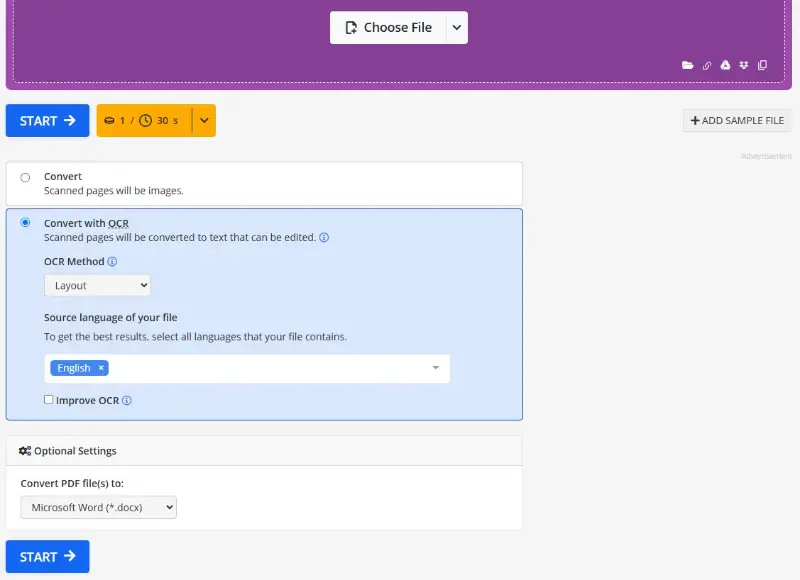
- Click the "Choose File" button and upload your pages.
- Select the "Convert with OCR" option to extract text from the scan.
- Wait for the tool to process the paper and convert it to Word.
- Once it is done, click the download link to save your new doc.
Pros:
- Simple and easy-to-follow steps, ideal for beginners.
- Can quickly transform scanned PDFs into Word documents.
- Your files stay private.
Cons:
- The free trial only gives you 16 credits, so you can’t employ it endlessly.
Understanding scanned PDFs
These are basically just digital snapshots of real paper - think sheets from a book, a form, or even someone’s scribbled notes.
When you copy something, you’re not really grabbing the words, you’re snapping a picture (usually as a JPEG or TIFF). These get bundled together inside a file.
Working with scanned PDFs? You’ll probably run into a few headaches:
- Searchability. If there’s no OCR, you can’t hit Ctrl+F and find what you need. The computer only sees a depiction, not words.
- Editability. Want to change something? Good luck. You’ll have to retype everything by hand or apply OCR, which can be a pain, especially if the scan is messy or handwritten.
- Size. All those pictures result in digitized PDFs being kind of bulky. Sharing, saving, or opening them can get slow or clunky.
Why convert image-based PDF to Word
Turning a scanned PDF to DOC unlocks all sorts of perks. Here’s why people bother with it:
- Once the text is recognized, you can edit it: fix mistakes, update info, or tweak the layout however you want.
- Word makes the material readable, so you can finally find that one phrase you’re looking for without endlessly scrolling.
- Extracting content gets way simpler. Take what you need and utilize it somewhere else - no copy-pasting from blurry images.
- You get version control, so it’s simple to track changes and see what’s different over time.
FAQ
- How accurate is OCR technology?
- Engine is generally very precise. However, its accuracy can depend on several factors such as the quality of the file, the resolution, and the layout complexity. For best results, it's always recommended to use high-quality materials with clear text when attempting conversions with an OCR tool.
- Can I convert any scanned PDF to Word?
- Most OCR PDF to Word converters, including those discussed in the article, can handle a wide range of PDFs.
- Will the formatting of the original document be preserved after conversion?
- PDF text recognition tools strive to maintain the view of the original, but results may vary. Complex layouts or fonts might require additional adjustments post-conversion.
- What can I do if the conversion results in errors or inaccuracies?
- If errors occur during conversion, you can manually edit the Word after the process. Additionally, checking and tweaking the settings of the OCR program might improve the result.
- Can I turn handwritten sentences into scanned PDFs to Word using OCR?
- OCR services are primarily designed for printed or typed text recognition. While some may offer limited support for handwritten text, sharpness can vary.
- How do I handle rasterized PDFs with multiple languages?
- OCR tools typically support multiple languages, but for the best results, you must ensure that the program is set to recognize the correct language.
- How can I improve the quality of the converted document?
- After the OCR process, proofread the item for any errors or misrecognitions. You can also manually alter the formatting, such as correcting the placement of depictions, tables, or text blocks.
Convert scanned PDF to Word: Tips
- Check quality. Ensure that the PDF has good clarity. Clear and legible pics result in more accurate text recognition during the conversion process.
- Verify language support. Confirm that the OCR PDF to Word converter supports the language used in your document. Some apps may have better precision with certain languages.
- Understand OCR settings. Adjust parameters like enhancement, and text recognition settings for optimal results.
- Explore additional features. Some OCR tools offer features beyond simple conversion, such as PDF splitting, merging, or translation.
Some OCR engines offer real-time translation features, recognizing and translating text instantly.
Conclusion
In conclusion, converting scanned PDF to Word opens up a realm of possibilities for efficient document management and editing. Choosing the right platform allows individuals to seamlessly integrate non-searchable papers into their digital workflows.
By following the options and tips shared in this guide, users can confidently navigate the conversion process, transforming static drafts into editable, and versatile assets for both personal and professional use.

Expert Tech Writer