Is It Illegal to Record Someone Without Their Permission
These days, with capture devices practically everywhere, the question "Is it illegal to record someone without their permission?" comes up more often than you’d think. It’s definitely a hot-button issue.
Let’s walk through a few scenarios: whether it’s video, audio, or something happening online, people want to know what’s actually allowed when someone hits record before getting that official "Okay".
Video recording people without their consent
Is it illegal to record someone without their permission?
Whether recording someone secretly is against the law really depends on where you are. In many places, it’s not allowed to shoot someone’s voice or image without their knowledge.
In fact, trying to sneakily record someone — especially where they’d expect privacy — can land you in trouble, both legally and ethically. It’s not just about breaking rules; there’s a real sense of trust involved.
Just to clarify, "expectation of privacy" is the thought that whatever you’re doing or saying won’t be observed or shared without your go-ahead. Most people count on that in certain places (think bathrooms, private offices, or even their own home).
In the United States, laws regarding recording people are all over the map, but there are two main types to consider: one-party consent and all-party consent laws.
| Type | Description |
|---|---|
| One-Party Consent | You can shoot a conversation if at least one party involved consents to the recording. Federal law also follows this rule under 18 U.S.C. § 2511. |
| All-Party Consent | You must obtain consent from every person involved in the conversation before transcribing it. Failing to get consent from all parties can result in legal consequences. |
The state laws vary. The majority of local governments have become one-party consent states: for example, Colorado, Idaho, Missouri, North Carolina, and others. However, some have adopted the two-party consent rule.
All-party consent states:
- California;
- Delaware;
- Florida;
- Maryland;
- Massachusetts;
- Montana;
- Nevada;
- New Hampshire;
- Pennsylvania;
- Washington.
Additionally, some states have a two-party consent rule for sessions that are made to broadcast publicly, such as radio or television shows.

Law examples
- Under California Penal Code § 632, all-party consent is required for preserving confidential conversations, including phone calls and face-to-face conversations.
- Under New York Penal Law § 250.05, you can record conversations if you are a participant or have permission from one of them.
In Europe, most countries have a one-party consent rule, with some exceptions like France and Germany. In other countries like India and Australia, recordings without permission are generally illegal.
Important:
Regardless of whether an individual is aware of the specific consent regulations in a given area, they are still responsible for adhering to those rules. In legal terms, ignorance or lack of knowledge about consent requirements is generally not considered a valid defense if someone violates these regulations.
It is crucial to be aware of the rules regarding the voice or video recording of individuals in your locality before making any attempts without authorization. If you do not abide by these laws, you could face legal consequences.
Is it illegal to film people in public without their consent?
So, here’s how it works: public spaces — think parks, sidewalks, city streets, government buildings, malls, restaurants — are pretty much open to everyone. If you can walk in without getting stopped, it’s public.
Recording people in these areas? Usually allowed, since there’s not much expectation of privacy when you’re out. Crowds are snapping photos or filming all the time, whether for memories or social media.
Still, you can’t ignore the legal side completely. Some places or situations have specific rules. Depending on where you are or what you’re filming, there might be public filming laws — especially if your snapping crosses the line into harassment, or if you’re planning to employ the footage for commercial purposes.
So, it’s not a free-for-all. Definitely pay attention to local regulations and use a bit of common sense. No one wants a legal headache over a clip.
Are you allowed to record people on your property?
In real estate, private property refers to land, buildings, or structures that are owned by an individual, a family, a business, or an entity and are not owned or controlled by the government or public entities.
Let’s keep this straightforward: If it is your place — house, apartment, whatever — most of the time, you’re allowed to cast. Still, there’s a line. Areas where people expect privacy, like bathrooms or bedrooms? That’s off-limits, both legally and, honestly, morally.
If you’re setting up cameras, it’s a good idea (and often required) to let visitors know. A simple sign or a quick mention is enough. It keeps things transparent.
Online video and audio recording
(1).webp "Recording online meetings and calls")
Is it illegal to voice record someone during an online meeting?
Here’s where things get a bit more complicated. Whether you can record an online meeting depends on where you — and the other participants — are located.
Some places require everyone’s consent, while others are fine with one approval. It’s also smart to check the rules of whatever platform you’re using (Zoom, Microsoft Teams, etc.), since they sometimes have their own policies.
Personally, I always make sure to tell everyone if I’m about to record the online meeting. It’s not just about following the law — it’s also about showing respect to everyone involved.
Additionally, when it comes to capturing calls specifically, rules can become more complex due to the visual element involved. Certain states treat sound and footage differently, so what’s okay for one might not be for the other.
Important:
Federal laws can also apply to the recording of video calls, especially if they involve interstate communication. The Electronic Communications Privacy Act (ECPA) - also referred as the Wiretap Act - regulates the interception of electronic communications and may come into play regarding video call recordings.
It's crucial to be aware that laws and regulations can change over time. It's advisable to seek legal advice or consult the laws specific to your state or situation to ensure compliance before recording any video calls. Always consider the ethical implications as well as the legal aspects.
Can I record an online meeting without letting other participants know?
There is no definitive answer to this question. Capturing someone on audio or video without their agreement is generally illegal in most countries. However, there are certain circumstances where it may be acceptable.
For example, if you are the host of an online meeting that is open to the public or will be broadcasted online, then you may record without additionally informing the participants. In this case, it would be assumed that all participants are aware of the tracking happening.
In other cases, you will need to obtain consent from everyone involved before you tape the meeting.
What rules apply to the calls between states?
If your participants are in states with different laws, the strictest applicable law generally prevails. For instance, one participant is in a two-party consent state and another in a one-party consent state. You will need to comply with the stricter two-party consent law.
If meeting attendees are in different countries, you'll need to consider international laws and regulations regarding data privacy and sampling. Regulations like the GDPR in the European Union have strict requirements for the handling and processing of personal data, including recordings.
GDPR stands for the General Data Protection Regulation. This is a comprehensive data privacy and security law in the European Union (EU) and the European Economic Area (EEA). It provides a set of rules and guidelines concerning the collection, processing, storage, and transfer of personal data by businesses and organizations.
Finally, the platform or screen recording software being used for the video call might have its terms of service or policies regarding shooting. These policies can dictate whether chronicling is allowed and any specific guidelines or restrictions regarding participant consent.
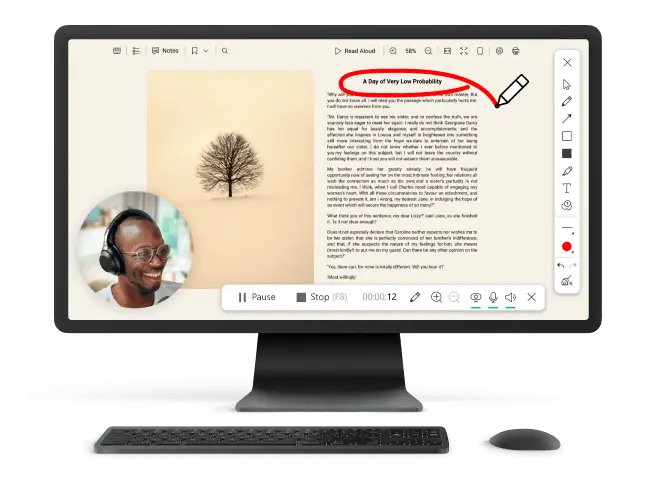
Others recording you without your consent
What to do if someone is secretly recording you?
If you realize someone’s secretly capturing you, try to keep your cool and take a moment to figure out what’s going on. Calmly ask the person to stop and let them know you’re uncomfortable with being recorded without your consent.
If they ignore your request or the situation starts to feel unsafe, it’s perfectly reasonable to step away or look for help from someone in charge, like security or even the authorities. Your safety and peace of mind matter most, so don’t hesitate to get support if things don’t feel right.
What is it called when someone records you without your permission?
Intercepting a conversation without permission is referred to as "eavesdropping" or "wiretapping" and is considered a violation of privacy. Depending on the situation, this behavior could be regarded as a breach of confidentiality.
Generally speaking, eavesdropping on someone without their authorization in private spaces and situations is unlawful. This includes recording someone through an audio device, video camera, or any other type of equipment. It doesn't matter if the device is hidden or in plain view - it's still against the law.
Can I sue someone for recording me without my permission?
As stated before, in most states, noting someone without consent is forbidden. If you have been captured without your permission, you could take legal action against the person who did it for invasion of privacy, intentional infliction of emotional distress, or other civil actions.
However, before you file a lawsuit, there are things to consider.
- You must demonstrate that the tape was done without your permission.
- The law varies from state to state on what type of compensation you can seek in a lawsuit.
In some cases, a court may order the individual responsible for the segmenting to pay damages for invasion of privacy. This includes emotional distress or any economic losses that occurred due to the sampling. You may secure a court injunction preventing additional recordings without your permission.
Additionally, if the session was made publicly available and caused significant harm to your reputation or resulted in financial losses, you could also sue for libel or slander.
For a statement to be considered libelous, it must meet certain criteria. It has to be untrue, harmful to the person's reputation, and be made with malicious intent.
If you believe that someone has illegally digitized you without your permission, it is important to consult with an experienced attorney. They will advise you on your legal options and help ensure that your rights are protected.
Tips on how to record meetings and calls
- Know the laws in your state. Before recording a conversation, ensure that you are familiar with the statutes in your state so that you don't breach any laws.
- Get verbal permission. Ask the person or people you are storing for verbal permission before doing so.
- Inform others of your intentions. Let everyone in the conversation know that you plan to dub it.
- Utilize visible instruments. Utilize visible devices, like cameras or phones, to make it clear that you are recording.
- Use caution with public spaces. Be aware of your surroundings and be cautious when preserving conversations in public spaces. Other people may be present who did not give their consent to be tracked.
- Be mindful of sensitive topics. Respect people's privacy and avoid shooting conversations about sensitive topics without their permission.
- Avoid using archives for malicious purposes. Do not employ streams for malicious purposes, such as blackmail or coercion.
- Store securely. If you have to store recordings for legal reasons, ensure that no one else has access to them without permission.
Advice to ensure your own privacy
Here are some tips to ensure you're not recorded without your permission in online settings:
- Check privacy settings. Platforms love to change things up, so don’t set your preferences once and walk away. Take a few minutes every so often to double-check who can see or record your information — trust me, it’s worth it.
- Utilize secure connections. Jumping on a public Wi-Fi for sensitive calls or confidential docs is asking for trouble. If you must, at least utilize a VPN. Better safe than sorry.
- Enable meeting controls. Before starting or joining a call, get familiar with the host tools and permissions. It only takes a few moments, and you’ll feel a lot more in control if you know how to mute people, limit screen sharing, or manage recording settings.
- Disable webcam and microphone. Sounds basic, but so many people forget. If you’re not actively participating, turn them off. No unwanted cameos or background noise — plus, you keep things private.
- Be mindful of screen sharing. Double-check what’s visible before you hit "share". Nobody wants their personal files or awkward tabs popping up in a professional setting.
- Use watermarking. Consider adding watermarks or copyright notices to your content to deter unauthorized recording or distribution.
- Monitor participant list. Keep an eye on the participant list during online meetings or events. If you notice unfamiliar or unauthorized participants, take action to address the situation and ensure your privacy is protected.
- Educate participants. When hosting online events or meetings, inform participants about policies and expectations regarding privacy. Encourage open communication and respect for each other's privacy rights.
- Report violations. If you suspect someone is recording without permission, don’t ignore it. Save any evidence and notify the platform’s support team or moderators. Acting quickly helps protect everyone’s privacy.
FAQ
- Does the content of the video recording matter?
- Definitely. Capturing for news or research may be legal, but private conversations or sensitive meetings are a different story — consent is key.
- Can video recordings be used as evidence in court?
- Yes, but only if obtained legally. Otherwise, they might not hold up.
- What are the penalties for recording someone without their consent?
- Penalties can include fines, lawsuits, or even criminal charges. It all depends on the local laws.
- Can I capture a conversation in public without consent?
- If there’s no real expectation of privacy, sometimes yes — but audio might still require permission, depending on where you are.
- Is it illegal to record an interaction with a police officer?
- It varies by place. In some areas, it’s allowed; in others, not so much. Always check local laws first.
Conclusion
In conclusion, the legality of recording someone without consent varies based on several factors, including location, laws, and the nature of the situation.
Recording in public spaces where there is no reasonable expectation of privacy might be legal in some jurisdictions. However, laws regarding recording conversations, particularly in private settings or online meetings, often require consent from all parties involved.
If you suspect you've been secretly recorded, consider seeking legal advice, documenting any evidence, and discussing your concerns with relevant authorities.
Understanding the laws in your area and obtaining consent before recording others can help avoid potential legal and ethical issues surrounding unauthorized recordings.

Editor-in-Chief at Icecream Apps