Best 4 AVI Video Editors
AVI is a go-to format for footage and audio, and it pops up everywhere. If you want to work with these files, you’ve got to have the right video editing software - otherwise, things get messy fast.
Let’s jump in and check out some of the best AVI video editors out there. I’ll break down what they can do, what helps them stand out, and which ones fit different types of projects.
Option 1. Icecream Video Editor
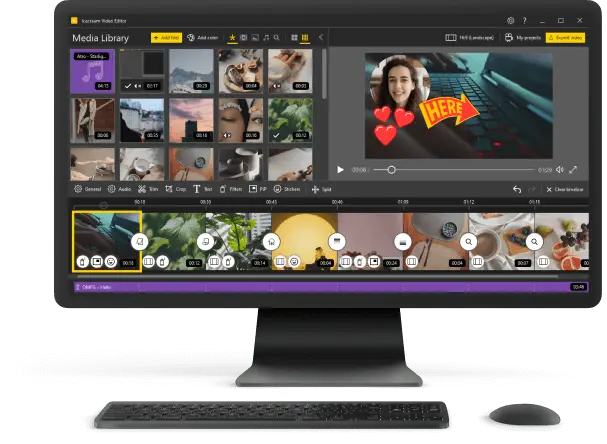
Icecream Video Editor makes modifying AVI clips easy, whether you’re just starting out or you’ve spent hours cutting visuals before.
It’s got a clean, simple interface, so you can begin without scratching your head over complicated menus. First-timers won’t get lost, but there’s enough here for anyone who wants to dig a little deeper.
You get all the basics - cropping, separating, and combining films, plus a few tools that can enhance the movie. Add transitions, throw on some cool effects, pop in text or tracks, and you’re set.
Features:
- Trimming and Cutting
- Merging Clips
- Transitions
- Text and Titles
- Audio Editing
- Visual Effects
- Speed Adjustment
- Voiceover
- Aspect Ratio Settings
- Splitting Clips
- Overlay
- Frame Rate Correction
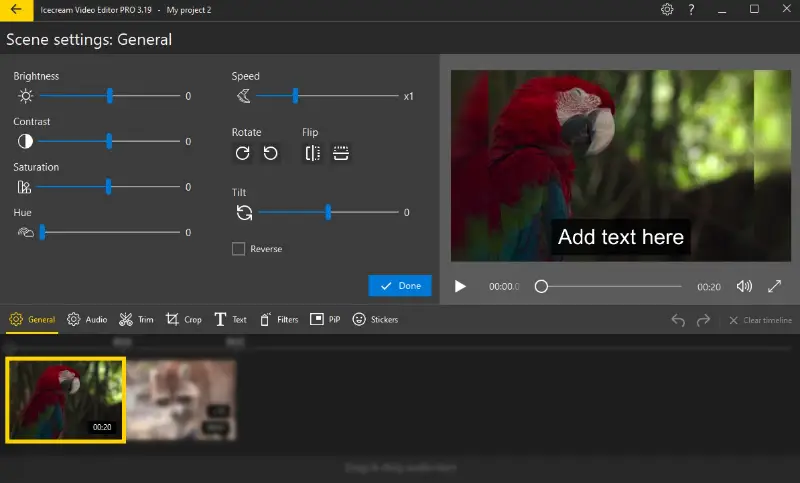
Export your output in different extensions and resolutions, so they’ll play nicely on whatever device or platform you want.
With a mix of simple and advanced options, Icecream Video Editor helps you create polished results - whether you’re piecing together family moments, sharing on social media, or tackling a bigger project.
Option 2. DaVinci Resolve
DaVinci Resolve packs a serious punch when it comes to video editing.
This isn’t some hobbyist tool, it’s what the pros employ. Think filmmakers, YouTubers, studios, you name it. Whether you’re amateur or guru, the app gives you everything you need to edit AVI files (and about any other format you can throw at it).
The free version isn’t watered down, either. You get advanced instruments that let you get super precise with your tweaks. Feeling creative? The Fusion module lets you dive into motion graphics and whip up those cinematic effects everyone loves.
Audio matters as much as visual, and that’s where the Fairlight panel steps in. It has utilities for sound redacting, mixing, and mastering. Clean up dialogue, mix in music, polish everything.
Features:
- Multi-track Timelines
- Color Correction
- Color Grading
- Fusion VFX Integration
- Motion Graphics
- Audio Editing (Fairlight)
- Sound Mixing
- Noise Mastering
- Multi-cam Altering
- Keyframe Animation
- Title and Text Modification
- Adding Subtitles to Video
- Transitions
- Visual Effects
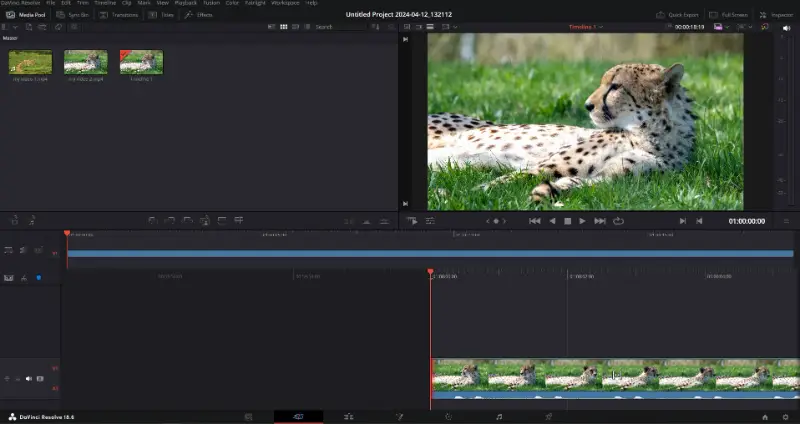
Working with a team? Multi-user collaboration lets several editors, colorists, or designers work on the same project at once. No more shuffling files back and forth, everyone stays in sync.
Cons:
- The learning curve is steep, especially if you’re new.
- You’ll need a fast computer to really get the most out of it.
DaVinci Resolve is a top pick for editing AVI videos. Its professional-grade utensils and flexibility make it a powerhouse, even in the free version. If you need even more, the subscription unlocks extra options.
Option 3. Shotcut
Shotcut is totally free and open-source, but don’t let that fool you - it’s packed with instruments. If you’re searching for a forceful AVI video editor that won’t cost a dime, that’s a top pick.
You can use it on Windows, macOS, or Linux, so it doesn’t matter what kind of computer you have. The interface? Clean and pretty easy to figure out, even if you’ve never modified clips before. You can move things around and start redacting almost right away.
This open-source video editing software comes loaded with basic tools. Want something more advanced, like transitions or customizable effects? You’ve got those, too. It handles fancy stuff without breaking a sweat.
Audio gets the attention it deserves here. You can add soundtracks, polish the track, and layer on effects to make everything sound crisp.
Features:
- Cutting and trimming
- Merging clips
- Video transitions
- Filters and effects
- Color grading
- Audio editing and mixing
- Keyframe animation
- Text and titles
- Chroma key (green screen)
- Clip speed adjustment
- Audio and video filters
- Masking and compositing
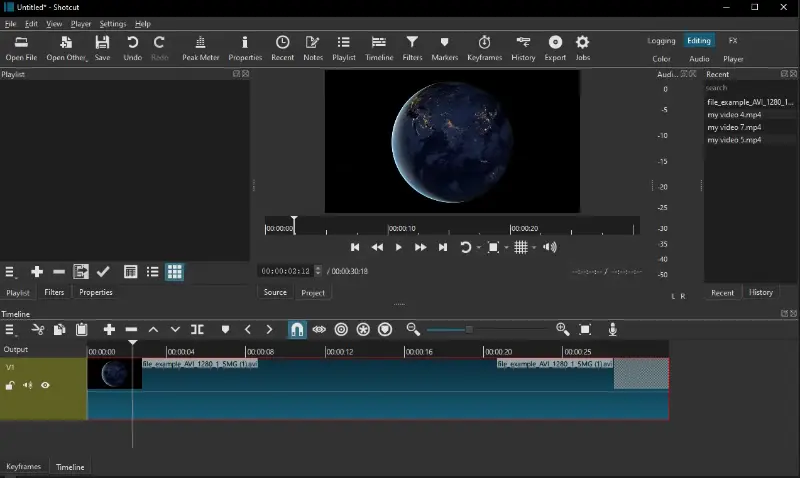
Encoding and export options cater to diverse needs, supporting various formats and resolutions suitable for different platforms and devices. This flexibility ensures edited content can be shared or viewed seamlessly across multiple devices.
Cons:
- The interface can be a lot for total beginners.
- Rendering takes longer than some other options.
So, whether you’re enhancing old AVI home movies, putting together YouTube clips, or working on something more serious, Shotcut gives you pro-level tools and flexibility - without the pricey bill.
Option 4. OpenShot
OpenShot is a free AVI video editor that welcomes everyone - whether you’re starting out or already know your way around a timeline. You get a clean, easy-to-use interface that doesn’t get in your way, but still contains plenty of advanced utensils when you want to dig deeper.
It lets you stack up as many tracks as you need, animate keyframes, play with 3D effects, and fine-tune every detail. Want to trim, slice, or combine footage? No problem. Add transitions, slow things down for dramatic effect, overlay images, or drop in titles - it’s all right there, a couple of clicks away.
Features:
- Curve-based keyframe
- Drag-and-drop integration
- Unlimited tracks and layers
- Clip resizing, trimming, rotation, and cutting
- Real-time video transitions
- Compositing and image overlays
- Title templates
- 3D animated effects
- Advanced timeline
- Frame-by-frame accuracy
- Time-mapping
- Audio mixing and editing
- Digital video effects
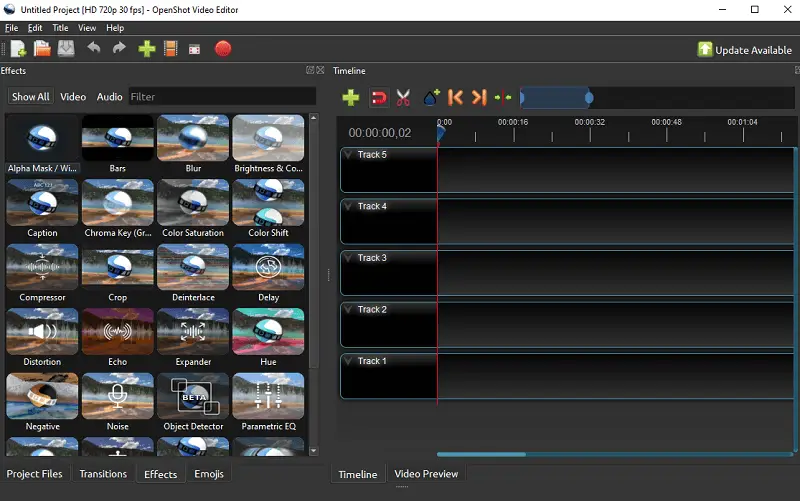
Even with all these mechanics, OpenShot stays surprisingly lightweight. It doesn’t bog you down with clutter, and you can use it on Linux, Windows, or macOS without any hassle.
Cons:
- It doesn’t take full advantage of hardware acceleration, so rendering can drag a bit.
Since OpenShot is open-source, the project keeps evolving. The community jumps in to fix bugs, incline, and tweak things — and if you’re feeling adventurous, you can even help shape the software yourself.
Tips for using AVI editors effectively
- Proxy files. When you’re working with big or high-res AVI, tweaking can drag. Utilize proxy - basically, low-res stand-ins- while you redact. Then, when it’s time to export, switch back to the full-quality originals.
- Audio features. The best apps make it simple to modify your track. Adjust levels, drop in a voiceover or background music, clean up any noise, and sync everything up so it sounds right.
- Back up. Hit save often. Seriously. Back up your project as you go, so a random crash doesn’t wipe out hours of work.
- Export settings. Think about where you’ll share your creation - YouTube, your phone, wherever - and set the right resolution, frame rate, and type.
- Shortcuts. Hotkeys are a lifesaver. Learn the key combos for your program, and you’ll fly through tasks way faster than clicking around with your mouse.
FAQ
- Why isn’t my AVI playing smoothly in my video editor?
- Usually, it’s a codec problem. Try converting your material to a more editing-friendly option like ProRes or DNxHD. That does the trick.
- What export settings should I use when saving modified AVIs?
- It depends on what you plan to do with the clip - upload it online, burn it to a DVD, or utilize it for broadcast. For the best quality, stick with the same codec as your original whenever you can.
- Why does my track have no sound?
- Take a look at the audio handler in your AVI. If your software can’t handle it, you’ll need to turn the song into something compatible. Here’s a quick guide on how to do that: convert the file.
- Can I edit 3D or VR content in AVI format?
- You can, as long as your program supports 3D tracks or panoramic visuals inside AVI.
- Why does the codec matter?
- IT has a big impact on both fidelity and how smoothly you can edit. Lossless codecs like HuffYUV or Lagarith give you top-notch quality, but the items get huge. Lossy ones such as DivX or Xvid keep weight smaller, but you’ll notice a slight drop in sharpness.
Conclusion
Finding the right AVI video editor can provide you with the tools needed to produce high-quality, professional content. From intuitive interfaces to advanced capabilities, the programs highlighted in this article cater to a range of needs and expertise levels.
Whether you're aiming for simple tweaks or complex projects, choosing the best video editor will empower you to bring your creative ideas to fruition. Explore the options, try out the features, and select the one that best aligns with your workflow and goals.

Expert Tech Writer